
The Jeep Cherokee XJ is a legend for a reason. Its unibody frame, solid axles, and compact wheelbase make it a natural conqueror of rocks, mud, and ruts. But for all its off-road prowess, the XJ has a well-documented weak link: the factory steering system. Stock components—including the flimsy “inverted Y” tie-rod design, a thin drag link, and a vague steering box—were engineered for pavement cruising and light gravel roads. The moment you add larger tires, a suspension lift, or lockers, the stock steering becomes a liability. Upgrading to heavy-duty steering components isn’t just about improving handling; it’s about preventing catastrophic trail failures and keeping your XJ tracking straight on the highway.
The heart of the problem lies in the OEM tie-rod. It’s hollow, narrow, and prone to bending the instant a 33-inch tire glances off a submerged rock. When the tie-rod bends, your toe alignment goes with it, causing rapid tire wear, unpredictable steering, and eventual breakage. The most popular upgrade path is a one-ton steering conversion using components from a GM or Dodge heavy-duty pickup. These systems swap the weak inverted-Y design for a robust inverted-T or crossover setup, utilizing solid 1.25-inch or 1.5-inch diameter tie-rod bars with genuine GM ES2233L and ES2234R tie-rod ends. The result is steering that resists bending, provides more precise input, and can take hard impacts without flinching. Many XJ owners also upgrade to a Durango or WJ (Grand Cherokee) steering box, which features a stronger casting and a firmer power steering feel, especially when paired with a steering box brace that reinforces the unibody’s weak mounting area.
Another critical upgrade is the track bar. On a lifted XJ, the factory track bar is often too short and uses a tiny rubber bushing that allows excessive axle shift. Heavy-duty adjustable track bars with polyurethane or heim joints keep the axle perfectly centered under the chassis, preventing the dreaded “death wobble”—that violent, teeth-rattling oscillation that plagues lifted XJs. Additionally, upgrading the steering shaft from the rag-joint design to a solid U-joint shaft (often sourced from a Jeep Grand Cherokee ZJ or an aftermarket unit) eliminates vagueness in the steering wheel, translating every small movement directly to the steering box.
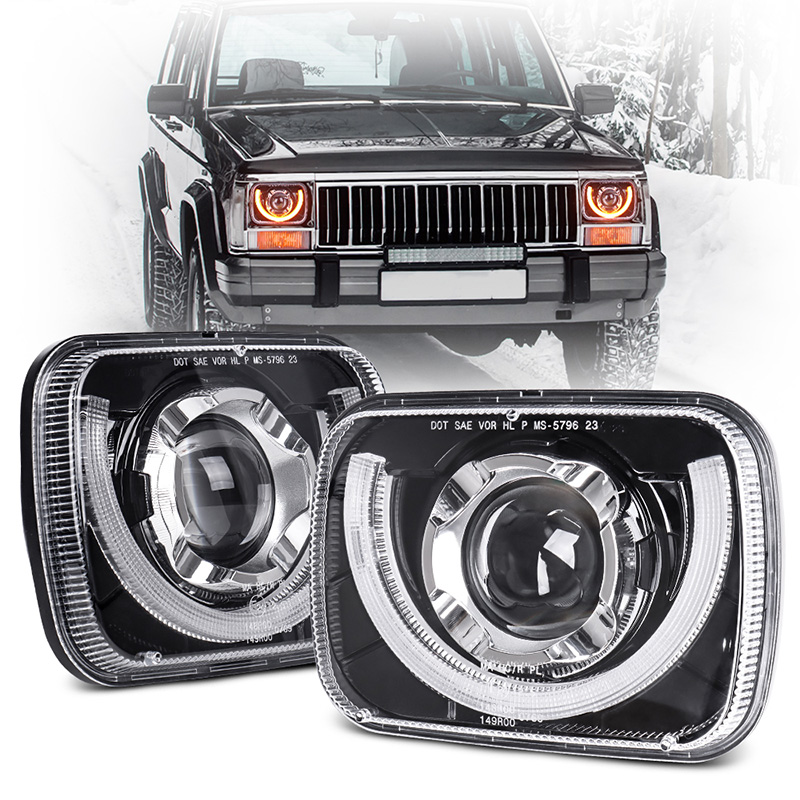
One of the most overlooked, yet critical, aspects of upgrading your steering system is the role your headlights play in post-upgrade safety. It sounds unrelated, but consider this: heavy-duty steering components, particularly upgraded tie-rods and track bars, often make the steering feel noticeably heavier and more responsive. As you test your new setup on dark trails or poorly lit back roads, you’ll need exceptional visibility to position your tires precisely on the line—especially when navigating tight turns between boulders or trees. Factory Jeep Cherokee XJ headlights are borderline inadequate in stock form; after steering upgrades, their dim, yellowish output becomes a genuine hazard. You cannot fully utilize the precision of a one-ton steering system if you cannot see the obstacles you are steering around. Upgrading to LED projector headlights with clear, wide cutoff patterns transforms night driving. The whiter, brighter beam allows you to see the exact placement of your front tires, spot hidden ruts, and identify the edge of a drop-off long before you arrive. Furthermore, a steering upgrade often allows you to run larger, heavier tires, which can cause additional front-end sag. That sag, left uncorrected, will misaim your headlights upward. After any steering or suspension work, you must re-aim your headlights using the adjustment screws on the housings. Properly aimed, high-output lights combined with tight, responsive steering make your XJ not just more capable, but demonstrably safer at night. Do not invest hundreds of dollars in tie-rods and track bars only to drive blind.
Finally, no heavy-duty steering upgrade is complete without addressing the steering cooler. Oversized tires and aggressive off-road driving generate significant heat in the power steering fluid, leading to foaming, loss of assist, and premature pump failure. A simple aftermarket finned cooler mounted in front of the radiator pays dividends in longevity. When paired with a heavy-duty steering box, a reinforced track bar, and a one-ton tie-rod, your XJ transforms from a wobbly, nervous trail companion into a planted, predictable machine. You’ll feel the difference immediately: no more sawing the wheel to track straight, no more white-knuckle death wobble scares, and no more bending tie-rods on the trail. Upgrade your steering, upgrade your lights, and your Cherokee will reward you with years of reliable, confidence-inspiring adventure.
